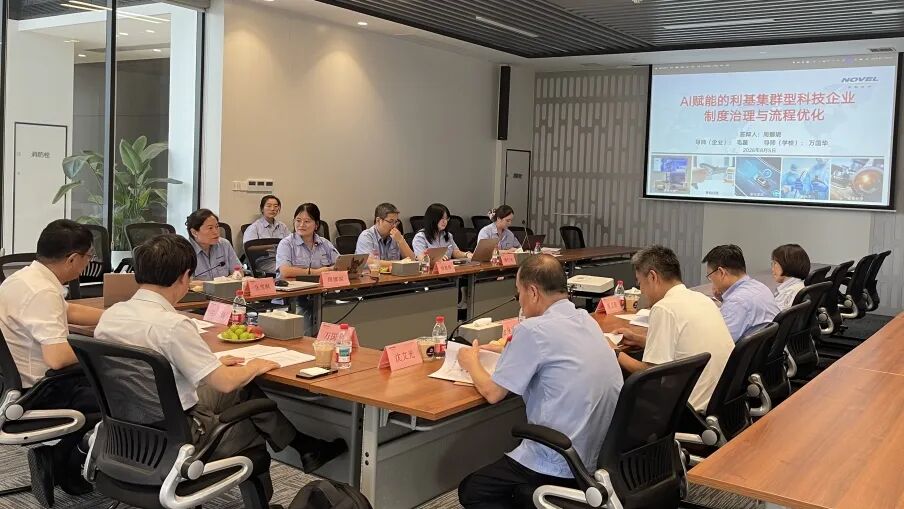
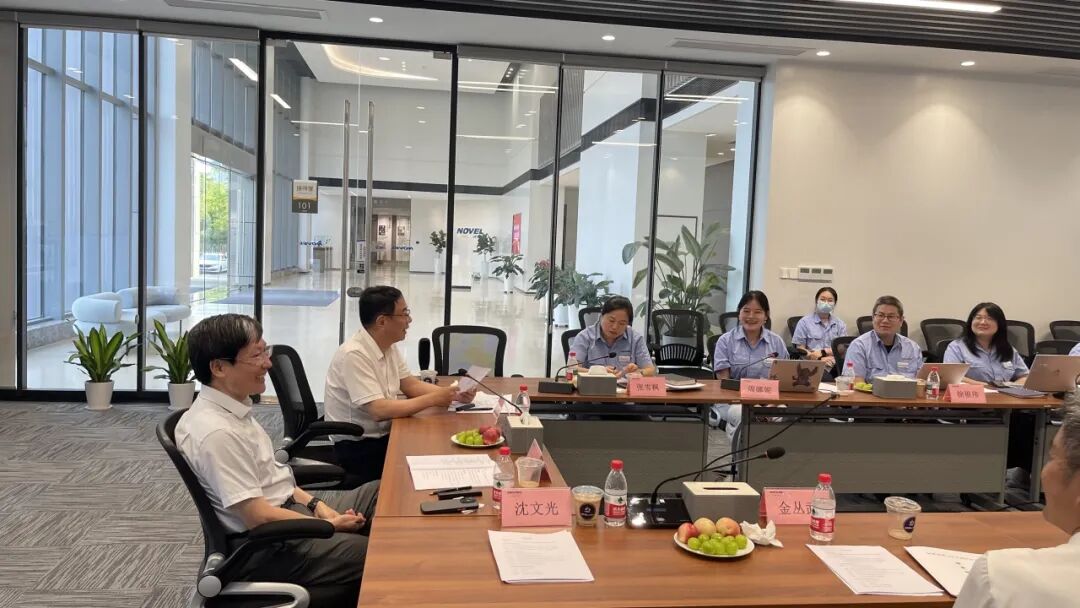
Recently, the postdoctoral research proposal opening and mid-term review meeting of Ningbo Yongxin Optics Co., Ltd. was successfully held at the company. The review panel was jointly composed of professors from Zhejiang University, Shanghai Jiao Tong University, and Ningbo University, relevant leaders from the Ningbo Municipal Human Resources and Social Security Bureau, and internal enterprise supervisors. The meeting was chaired by Zhang Xuefeng, Manager of the Human Resources & Administration Department. At the meeting, the company's two newly admitted postdoctoral researchers delivered their proposal presentations in turn and successfully passed the review.
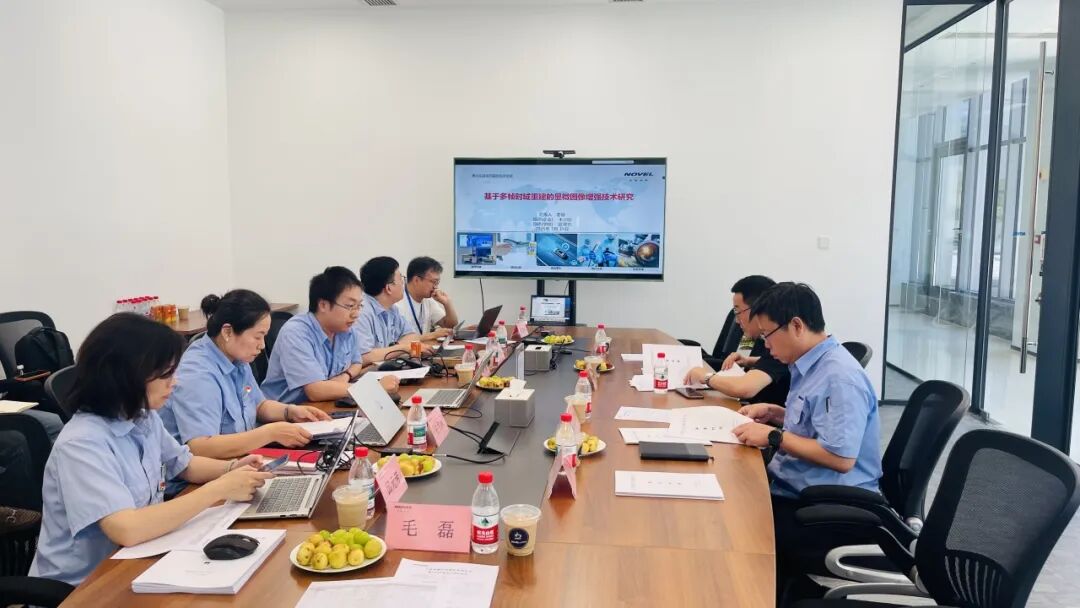
Dr. Jiang, whose research topic is Research on Microscopic Image Enhancement Technology Based on Multi-frame Temporal Reconstruction, focuses on long-term dynamic fluorescence observation of living cells. Targeting the industry pain point of the low signal-to-noise ratio (SNR) in low-light imaging, the study conducts research on intelligent reconstruction and enhancement algorithms for microscopic images, develops image-processing solutions adapted to domestically produced microscopy equipment, and supports the engineering implementation of a real-time enhancement software system. Closely aligned with the upgrading needs of domestic biological microscopes, the project holds broad prospects for industrial application.
Dr. Zhou, the company's first full-time Doctor of Management, works on AI-Empowered Institutional Governance and Process Optimization of Niche-Cluster Technology Enterprises. Grounded in the customized production characteristics of high-precision optical cluster manufacturers, and addressing pain points of traditional management models such as information silos and inefficient processes, the study builds a dual-path research framework in line with the company's digital transformation needs. Drawing on large language models (LLMs), process simulation and other technologies, it carries out research on institution identification, process modeling, and intelligent work-order optimization. With clear research objectives, a feasible technical roadmap, and sufficient supporting resources and funding, the project carries both theoretical value and significance for industrial implementation. The panel fully affirmed the research directions and approaches of both projects and offered optimization suggestions based on industrial realities.
In the mid-term assessment segment, the in-station postdocs Dr. Zhang and Dr. Cheng reported their phased research progress in turn, and both successfully passed the mid-term review. Dr. Zhang focuses on live-cell imaging and super-resolution imaging algorithm optimization; he has completed core research on frequency-domain modulated single-frame computational optical-sectioning microscopy and frequency-domain optimized structured illumination microscopy, effectively improving the overall performance of fluorescence microscopy. To date, he has published one SCI paper, been granted one invention patent, and had one invention patent application accepted. Dr. Cheng concentrates on the challenging problem of automated non-destructive gripping of optical lenses, has deepened research in the field of pneumatic soft robotic grippers, and built a well-developed modular flexible gripper technology system. He has filed one invention patent, leads one provincial-level scientific research project and one provincial-level teaching reform project each, and has been selected into the Ningbo Leading and Top-notch Talent Program (Tier 3). The panel highly recognized the solid phased achievements of the two postdocs, noted that their research is highly aligned with the company's main business, and offered targeted guidance on experimental optimization, intellectual property portfolio, and commercialization of technological achievements.
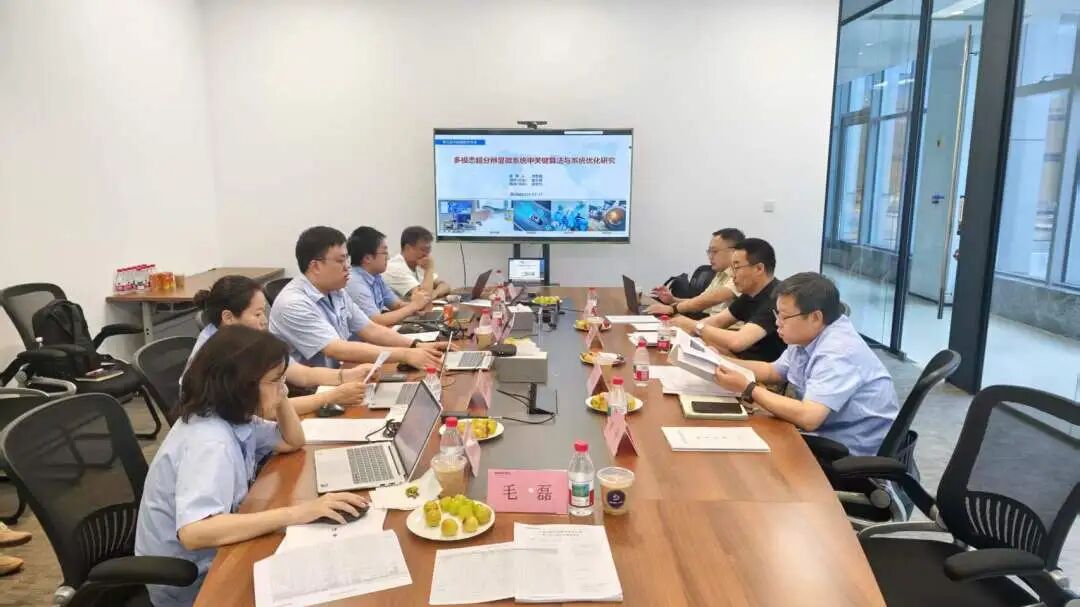
The panel highly affirmed the construction outcomes of Yongxin Optics' national-level postdoctoral research workstation, noting that the station always conducts research and development around real industrial needs and effectively serves as a high-quality platform for attracting and cultivating high-level talents and tackling key core technologies. The panel encouraged the in-station postdocs to continue deepening their work in specialized fields, strengthen experimental verification, and strive to produce more implementable and transferable proprietary core technologies.
At the meeting, Mao Lei, Chairman of the Board, delivered special work instructions on organizational transformation, efficiency improvement, and industry-research integration in the AI era. He pointed out that enterprise efficiency improvement requires an order-of-magnitude leap, and that AI will drive organizational iteration toward a "liquid organization"; all teams must break away from fixed mindsets and pursue agile iteration through a "trial-and-error plus verification" approach. He emphasized that in the era of human-machine collaboration, human professional judgment remains the core competitiveness; every business should start from precise, small entry points, advance pragmatically, and achieve rapid closed-loop delivery. He also encouraged postdocs to take root in industry and deepen research, feeding industrial practice results back into academic research, and called on all employees to face the opportunities and challenges brought by AI transformation, proactively upgrade their capabilities, and keep pace with the company's innovation-driven development.
Looking ahead, Novel Optics will continue to consolidate the construction of its national-level postdoctoral research workstation, deepen the university-enterprise dual-supervisor joint training model, and keep introducing high-end talents in optical engineering, image algorithms, and precision machinery. Focusing on core fields such as microscopic imaging, precision optical manufacturing, and intelligent equipment, the company will carry out technical breakthroughs, build a foundation for innovation-driven development with a high-level talent workforce, and support the high-quality development of the regional optical industry.

 Products